
Department of Computer Science with Data Science
About
Our program in Computer Science with Data Science is committed to propelling the interdisciplinary domain of Data Science forward, where statistical analysis, machine learning, and specialized knowledge intersect to uncover invaluable insights from intricate datasets.
We take pride in cultivating an interactive learning atmosphere that empowers students with the competencies and understanding required to excel in the contemporary data-centric landscape. Our goal is to nurture the upcoming cohort of Data Scientists while conducting pioneering research aimed at tackling tangible real-world issues.
Our dedication extends to fostering excellence in both academic pursuits and industry endeavors, all while prioritizing ethical and conscientious data methodologies.
Program Highlights
Hands-On Learning: Acquire practical skills through hands-on projects, working with real-world datasets to solve complex problems.
Expert Faculty: Learn from seasoned professionals and esteemed faculty who bring a wealth of industry knowledge into the classroom.
Advanced Technologies: Access state-of-the-art labs and technology, gaining proficiency in the latest tools and techniques used in the field.
Industry Connections: Leverage our extensive network for internships, industry projects, and guest lectures, connecting theory to real-world applications.
Capstone Projects: Showcase your skills through impactful capstone projects, demonstrating your readiness for the dynamic field of data science.
Career Opportunities
- Data Scientist
- Data Analyst
- Data Engineer
- Data Architect
- Business Intelligence Analyst
- Machine Learning Engineer
B.Sc CS with DS Curriculum & Syllabus
|
I Year |
II Year |
III Year |
|
Semester – I |
Semester – III |
Semester – V |
|
Tamil/ Other languages -I |
Tamil/ Other languages – III |
CC- IX: Data Visualization |
|
English – I |
English – III |
CC- X: Data Visualization Practical |
|
CC- I: Python Programming |
CC- V: Data Structures |
CC- XI: R Programming |
|
CC- II: Python Programming Practical |
CC- VI: Data Structures Practical |
CC- XII: R Programming Practical |
|
Allied I: Mathematics I |
Allied III: Statistics I |
EC -V: |
|
Basic Tamil/Advanced Tamil/ Non-Major Elective I |
SEC- IV: (Entrepreneurial Based): Web |
EC -VI: Big Data Analytics |
|
SEC- I: Office Automation FC: Fundamentals of Computers |
SEC- V: Desktop Publishing Practical Environmental Science |
Value Education Internship / Industrial Training (During |
|
Semester – II |
Semester – IV |
Semester – VI |
|
Tamil/ Other languages – II |
Tamil/ Other languages – IV |
CC – XIII: Data Analytics |
|
English –II |
English – IV |
CC – XIV: Data Analytics Practical |
|
CC- III: Java Programming |
CC- VII: Data Science Essentials |
CC – XV: Natural Language Processing |
|
CC- IV: Java Programming Practical |
CC-VIII: Data Science using Python |
EC -VII: Artificial Neural Networks |
|
Allied II: Mathematics II |
Allied IV: Statistics II |
EC-VIII: Robotics and Its Applications |
|
Basic Tamil/Advanced Tamil/ Non-Major Elective II |
SEC-VI: Emotional Intelligence |
Professional Competency Skill Course: Mini Project |
|
SEC-II: Office Automation Practical SEC- III: Quantitative Aptitude |
SEC-VII: Technical Writing Environmental Science |
Extension Activity |
Faculty Members
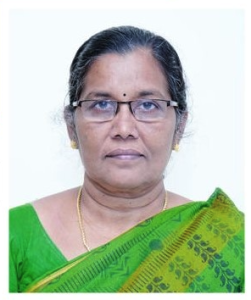
Dr. M. Shanthi
HOD / Associate Professor
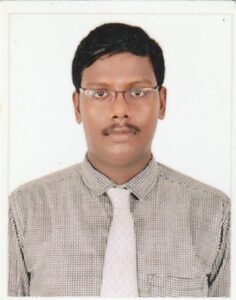
Mr. M. Karthick
Assistant Professor
Mrs. AR. Sangeetha
Assistant Professor
🎉 Proud Achievement by Our Students!
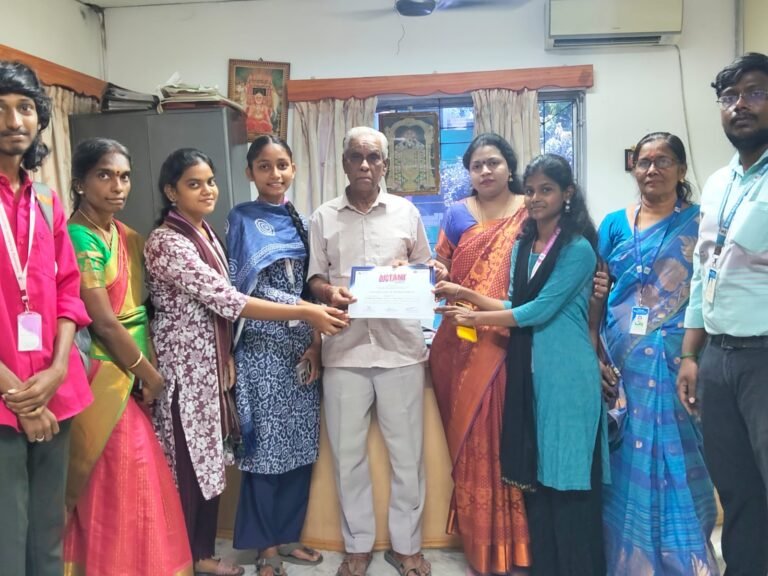
We are proud to share the achievements of our students from I B.Sc Computer Science with Data Science. Ms. Dayana, Ms. Malini, and Mr. Logesh secured the Second Prize in the Cricket Puzzle Competition, showcasing their analytical and problem-solving skills.
In addition, Ms. Malini actively contributed to the academic event by presenting a paper on “AI in Actuarial Science”, highlighting the role of artificial intelligence in modern actuarial practices.
The event was conducted at Crescent College, providing a valuable platform for students to demonstrate their talents and academic excellence.
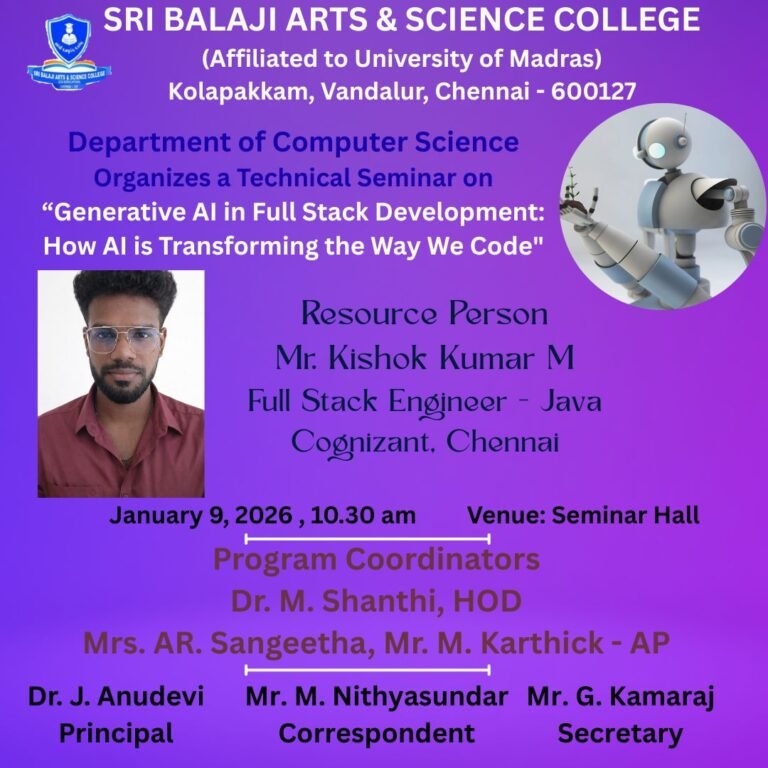
“Generative AI in Full Stack Development: How AI is Transforming the Way We Code”
The Department of Computer Science organized a Technical Seminar on “Generative AI in Full Stack Development: How AI is Transforming the Way We Code” on 09 January 2026, from 10.30 AM to 11.30 AM, at the college campus.
The seminar was delivered by Mr. M. Kishok Kumar, Full Stack Engineer – Java, Cognizant Technology Solutions, Chennai. The session aimed to familiarize students with the growing impact of Generative Artificial Intelligence in modern full stack development.
During the seminar, the resource person explained the role of Generative AI in frontend and backend development, highlighting the use of AI-powered coding assistants, automation in debugging, and improved development efficiency. He also shared real-time industry use cases, helping students understand how AI is transforming software development practices in the IT industry.
The session was interactive, and students from the Department of Computer Science actively participated. The seminar provided valuable insights into emerging technologies and career opportunities in AI-driven development. Overall, the program was informative and beneficial, successfully enhancing students’ technical knowledge and industry awareness.
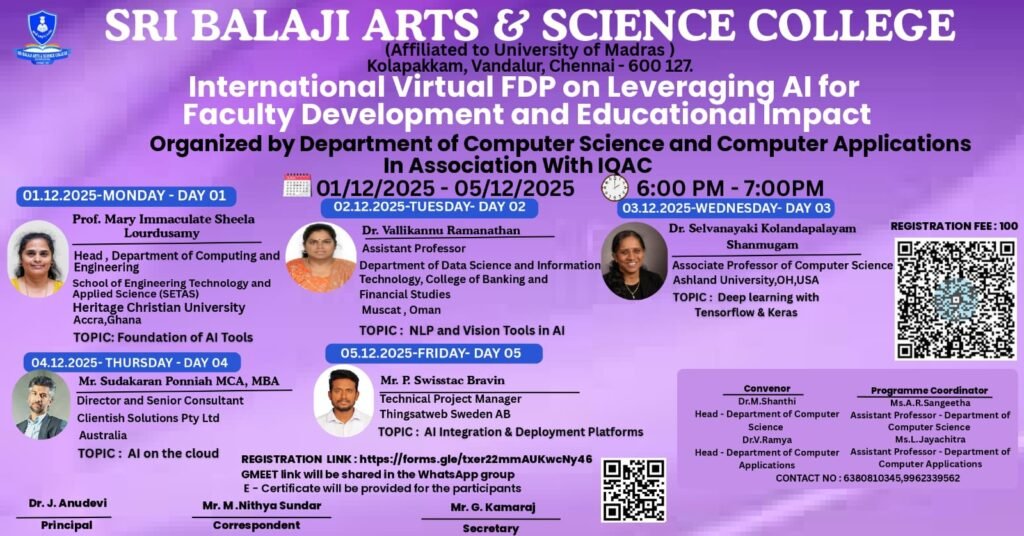
Five Days International Virtual FDP Report
Organized by: Department of Computer Science and Computer Applications In Association with: IQAC
Theme: Leveraging AI for Faculty Development and Educational Impact
The Department of Computer Science and Computer Applications, in collaboration with the Internal Quality Assurance Cell (IQAC), successfully organized a Five Days International Virtual Faculty Development Programme (FDP) on “Leveraging AI for Faculty Development and Educational Impact.” The event brought together distinguished international experts who shared valuable insights into emerging AI tools, methodologies, and applications shaping modern education and research.
Day 1: Foundation of AI Tools
The FDP commenced with an enlightening session by Prof. Mary Immaculate Sheela Lourdusamy, Head, Department of Computing and Engineering, School of Engineering Technology and Applied Science (SETAS), Heritage Christian University, Accra, Ghana.
She provided a comprehensive introduction to artificial intelligence, highlighting foundational tools, basic concepts, and practical applications essential for faculty members to integrate AI into teaching and academic research.
Day 2: NLP and Vision Tools in AI
The second day featured an in-depth session by Dr. Vallikannu Ramanathan, Assistant Professor, Department of Data Science and Information Technology, College of Banking and Financial Studies, Muscat, Oman.
She explored cutting-edge Natural Language Processing (NLP) and Computer Vision tools, emphasizing their real-world applications, latest advancements, and relevance in automating academic and industry-related tasks.
Day 3: Deep Learning with TensorFlow and Keras
The third day was handled by Dr. Selvanayaki Kolandapalayam Shanmugam, Associate Professor of Computer Science, Ashland University, USA.
The session delivered a strong foundation in deep learning, covering neural networks, model building, and hands-on implementation using TensorFlow and Keras. The resource person offered practical demonstrations and explained concepts in a highly accessible manner.
Day 4: AI on the Cloud
Day 4 featured an impactful session by Mr. Suda Ponniah, Director and Senior Consultant with over 25 years of global IT expertise.
His session focused on cloud-based AI services, deployment strategies, and the importance of scalable cloud infrastructures. He highlighted real-world scenarios where cloud technologies enhance AI-driven applications and academic research ecosystems.
Day 5: AI Integration & Deployment Platforms
The final day was led by Mr. Swisstac Bravin P, A results-driven Technical Project Manager with expertise in AWS Cloud infrastructure, AI/ML integrations, cybersecurity, IoT automation, and full-stack development.
He delivered an insightful session on integrating AI into real-world systems and deploying models using various platforms. He also demonstrated practical implementation workflows and automation strategies relevant to modern institutions and industries.
Conclusion
The five-day FDP was a remarkable success, enriching faculty members with essential knowledge and practical skills in emerging AI technologies. The sessions fostered academic growth, interdisciplinary learning, and global collaboration. Participants expressed great appreciation for the expertise shared by the international resource persons, making this event a significant milestone for the institution.